

In development discourse surrounding Kenyan agriculture, the narrative is almost always about access—access to finance, access to markets, access to better inputs. Yet behind every policy recommendation lies an implicit assumption: that farmers know what they would do if they had money, or that they understand the opportunities available to them. This assumption is often wrong. The real bottleneck constraining agricultural entrepreneurship in Kenya is not primarily financial or infrastructural. It is cognitive and aspirational. Many Kenyan small-scale farmers lack the vision, mental models, and frameworks necessary to imagine their farms as businesses with multiple pathways to growth and value creation. They cannot articulate ideas worth financing because they have never encountered the possibility that such ideas exist or that such transformation is achievable for someone like them. This is the root cause that development interventions have largely overlooked: the absence of entrepreneurial thinking itself. Until this foundational gap is addressed, expanding access to credit or markets will have limited impact. A farmer without an idea cannot use a loan productively. A farmer without market awareness cannot recognize opportunities. A farmer without exposure to alternative models cannot envision a different future. This essay explores why this vision gap exists, how it perpetuates itself, and what interventions might genuinely unlock entrepreneurial thinking among Kenyan farmers—not as a quick fix, but as a systemic shift in how farming is understood and practiced. Jump to Section Part One: Understanding the Entrepreneurship Gap The Livelihood Mindset vs. the Business Mindset Farming in rural Kenya has historically been framed as a livelihood—a way of life and source of subsistence passed down through generations. Parents teach children how to plant, when to harvest, which crops grow in their soil, and how to manage through dry seasons. This knowledge is valuable and hard-won, accumulated through generations of experience with local conditions. However, this livelihood framing creates a specific mental model: farming is something you do the way it has always been done. The goal is to feed your family, generate some cash for immediate needs, and maintain the cycle. Success is measured in terms of survival and stability, not growth or transformation. In contrast, a business mindset frames farming as a value creation activity with multiple possible pathways and scaling potential. A farmer with a business mindset asks different questions: What do customers want? What are they willing to pay? How can I reduce costs or improve quality? What could I do with my land and labor beyond traditional production? Where are the inefficiencies in the value chain I could exploit? These are not necessarily questions that arise naturally from a subsistence farming background. They require exposure to market thinking, examples of innovation, and a belief that such transformation is possible for people in your situation. Most small-scale Kenyan farmers operate primarily within the livelihood mindset. This is not a personal failing; it is rational adaptation to their circumstances and what they have been exposed to. When you are uncertain about your next harvest and your children’s school fees are due, planning a sophisticated value-addition business feels like a luxury you cannot afford—or worse, a risk you cannot take. The Intergenerational Transfer of Knowledge and Constraints Knowledge about farming is primarily transferred through families and communities. Children learn by doing alongside parents. Practices and assumptions about what is possible get embedded early and reinforced through daily experience and observation of peers. Critically, this intergenerational transfer does not automatically include exposure to innovation or alternative models. A child who has never seen anyone in their village process crops into value-added products will not grow up imagining themselves doing so. A teenager who knows that everyone in their community sells their harvest to the same middleman will not naturally question whether other markets exist. The problem is compounded by the fact that successful innovations are often localized. A farmer in one part of Kenya who has successfully moved into horticulture production or dairy processing may be entirely invisible to farmers in another region—not because information technology is lacking (though that is sometimes true), but because social networks, value chains, and information channels are fragmented. Farmers primarily learn from their immediate social sphere. This creates a self-reinforcing cycle: farms in a given area operate in broadly similar ways because that is how everyone operates, because that is what farmers learned from family and peers, because no one around them has done anything different. Breaking this cycle requires injecting new examples and possibilities into the social learning process. Economic Pressures and the Temporal Poverty Trap Even if a farmer were to imagine an entrepreneurial opportunity, economic pressures often make pursuing it extremely difficult. Small-scale farmers in Kenya operate on thin margins. Most farm plots are less than one hectare. Yields are often low due to poor soil, limited access to quality inputs, or suboptimal practices. Income is seasonal and uncertain. In this context, time poverty is as real as financial poverty. When you are working dawn to dusk to maintain current production levels and generate subsistence income, finding time to explore new opportunities, attend training, or plan a business transition is luxurious. When your cash flow is unpredictable and your savings are minimal, taking on even a small risk—trying a new crop variety, investing in equipment for value addition—feels potentially catastrophic. Temporal poverty also constrains cognitive capacity. Neuroscientific and behavioral economics research has shown that people operating under scarcity—whether financial or temporal—have reduced cognitive bandwidth for long-term planning and complex decision-making. A farmer preoccupied with immediate survival is less able to engage in the kind of creative, future-oriented thinking that entrepreneurship requires. This is not a moral failing or lack of capability. It is a predictable human response to constraint. The implication is that creating space for entrepreneurial thinking—through reduced time pressures, basic income security, or deliberate protected spaces for learning and planning—is a prerequisite, not an afterthought. Information Asymmetry and Invisible Opportunities Most Kenyan small-scale farmers have limited visibility into value chains beyond their immediate role. A maize farmer
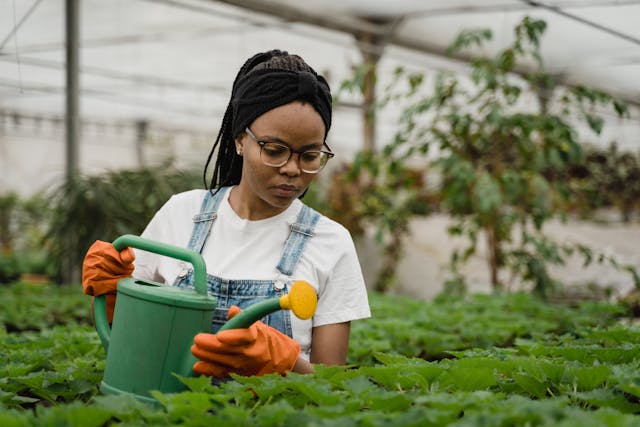
Why Kenya’s Youth Aren’t Farming & How to Inspire More
One of the most pressing challenges facing Kenyan agriculture is the exodus of young people from farming. Youth—aged 18 to 35—represent the future workforce and innovation potential of the agricultural sector, yet they are increasingly turning away from farming as a livelihood. Instead, many pursue urban employment, informal sector work, or migration abroad. Those who remain in rural areas often view farming as a temporary fallback rather than a desirable career. This youth exodus has profound implications. It depletes rural areas of productive labor and entrepreneurial energy. It fragments knowledge transfer, as fewer young people learn traditional farming practices from parents. It weakens institutions that depend on youth participation. And it leaves aging farmers without succession plans or family labor to maintain productivity. The causes of youth disengagement from agriculture are typically described in surface terms: poor returns, hard labor, lack of finance, or the allure of city life. These observations contain truth but miss the underlying system dynamics. The real story is more complex and more tractable. Youth are not inherently opposed to agriculture; rather, they are responding rationally to a set of structural conditions that make agriculture seem unattractive compared to alternatives. Understanding these conditions and the feedback loops that perpetuate them is essential to addressing youth participation. Part One: Why Youth Are Leaving Agriculture The Income Reality and Comparative Disadvantage For a young person making a career choice, agriculture as currently practiced in rural Kenya is genuinely less attractive than alternatives—not because of irrational preferences, but because of real economic differences. Small-scale farming in Kenya typically generates annual household incomes of 30,000 to 100,000 Kenya Shillings (KES), often irregular and seasonal. In contrast, even unskilled urban employment—working in retail, transportation, security, or the informal sector—can generate 200,000 to 400,000 KES annually, with more predictable monthly cash flow. Skilled urban employment generates substantially more. For a young person with ambition and options, the economic case for staying in farming is weak. The difference in income is not marginal; it is a multiple of two to four times. Over a decade, that compounds into a substantial lifetime earnings difference. Youth are not irrational in choosing higher income. They are responding to real economic incentives. The problem is not youth preference but the structure of agricultural returns. Lack of Visibility Around Agricultural Income Potential However, the income comparison is not simply between actual small-scale farming and actual urban employment. It is also shaped by what youth believe is possible in agriculture versus what they believe is possible in urban contexts. Many young people have limited visibility into the actual income potential of agricultural entrepreneurship. They see their parents or relatives farming at low intensity, generating modest incomes, often struggling with debt or low yields. They extrapolate from this visible experience to assume that farming will always be like this—low-income, uncertain, and unrewarding. What they often do not see are the agricultural entrepreneurs in their region or nearby regions who have successfully shifted to higher-value production, market-oriented farming, or agribusiness. They do not see the youth who have built substantial incomes through horticulture, dairy, poultry, or input distribution. These successes exist but are often invisible to rural youth because they are geographically dispersed, not systematically communicated, and embedded in social networks that youth have not yet accessed. The contrast with urban opportunities is sharper because urban examples are more visible. A young person in a rural area can see, through social media, family members, or visitors, the material success of youth in cities. These examples are vivid and concrete, even if they also represent survivorship bias (successful urban youth are more visible than the many who struggle or fail). Poor Working Conditions and Labor Quality Beyond income, the day-to-day experience of farming is often unattractive to youth. Agricultural labor is physically demanding, often involving long hours in sun, heat, and rain. The work is repetitive and can feel monotonous compared to more varied occupations. There is little prestige or social status associated with being a small-scale farmer. Young people, especially those with some formal education, increasingly see farming as drudgery—something their parents did out of necessity, not something they aspire to. The alternative—sitting in an office, working in a shop, or doing almost any non-manual work—feels like upward mobility, a sign of progress and development. This preference for non-manual work is connected to how education and development are culturally framed. Formal education is presented as a pathway away from farming, toward better opportunities. Completion of secondary or tertiary education is meant to open doors to non-agricultural employment. For many young people and their families, this is the entire purpose of education—to escape farming. Uncertainty and Risk Perception Agricultural production is inherently uncertain. Rainfall is unpredictable. Pests and diseases threaten crops. Market prices fluctuate. For a young person trying to build a stable life—to establish a household, educate children, build assets—this uncertainty is unattractive. In contrast, even modest urban employment often feels more certain. There is typically a wage, however small, that comes monthly. There is some degree of predictability even if it is imperfect. Youth are particularly sensitive to risk because they have limited assets to buffer against failure. An older farmer with established land and household assets can weather a poor season. A young person with no capital, no experience, and no safety net cannot. The rational response to this asymmetry is to seek more certain income pathways. Limited Access to Land and Capital Historically, young farmers could inherit or access family land to establish themselves in agriculture. This pathway is increasingly blocked. Population pressure has fragmented landholdings. Younger children often have minimal viable plots. Land laws have created complexity around inheritance. And for youth who migrate to cities, return to access family land may feel like failure. Capital is also difficult for youth to access. Banks require collateral that young people typically lack. Family credit is limited when family members are themselves under financial pressure. Youth are often excluded from credit programs designed for “established farmers.” Without land

WHo are the Best 20 CSR Donors in Kenya 2025?
In this exclusive guide, discover 20 of Kenya’s most generous CSR donors—and how your project, initiative, or organization can tap into their support in 2025 and beyond.

How to Grow Your MSME Using the Best BDS Providers
In this blog, learn the best BDS services available in Kenya. We will focus on their key offerings and how they can contribute to the growth of your MSME.
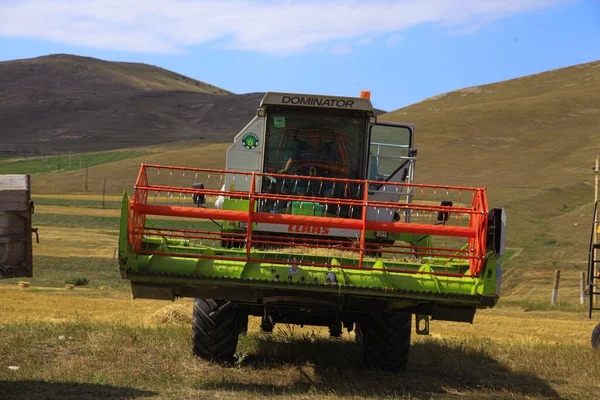
How to Sustainably Transform Agriculture & Rural Development in Africa
Agriculture & Rural Development in Africa: A list of best Innovative Approaches for Sustainable Transformation such as Market systems development, food systems, smart/digital farming, climate-smart agriculture, Food traceability and quality systems, Commercial farming
Best 10 Food and Agriculture Blogs in Kenya-2020
A list of the most-read posts from Agcenture.com, our food and agriculture blog in Kenya. They cover best agribusiness ideas, kitchen gardens, kienyeji veggies.
